
High-Efficiency Heat Pump Monroe NC Winter: What You Actually Need to Know Before the Cold Hits
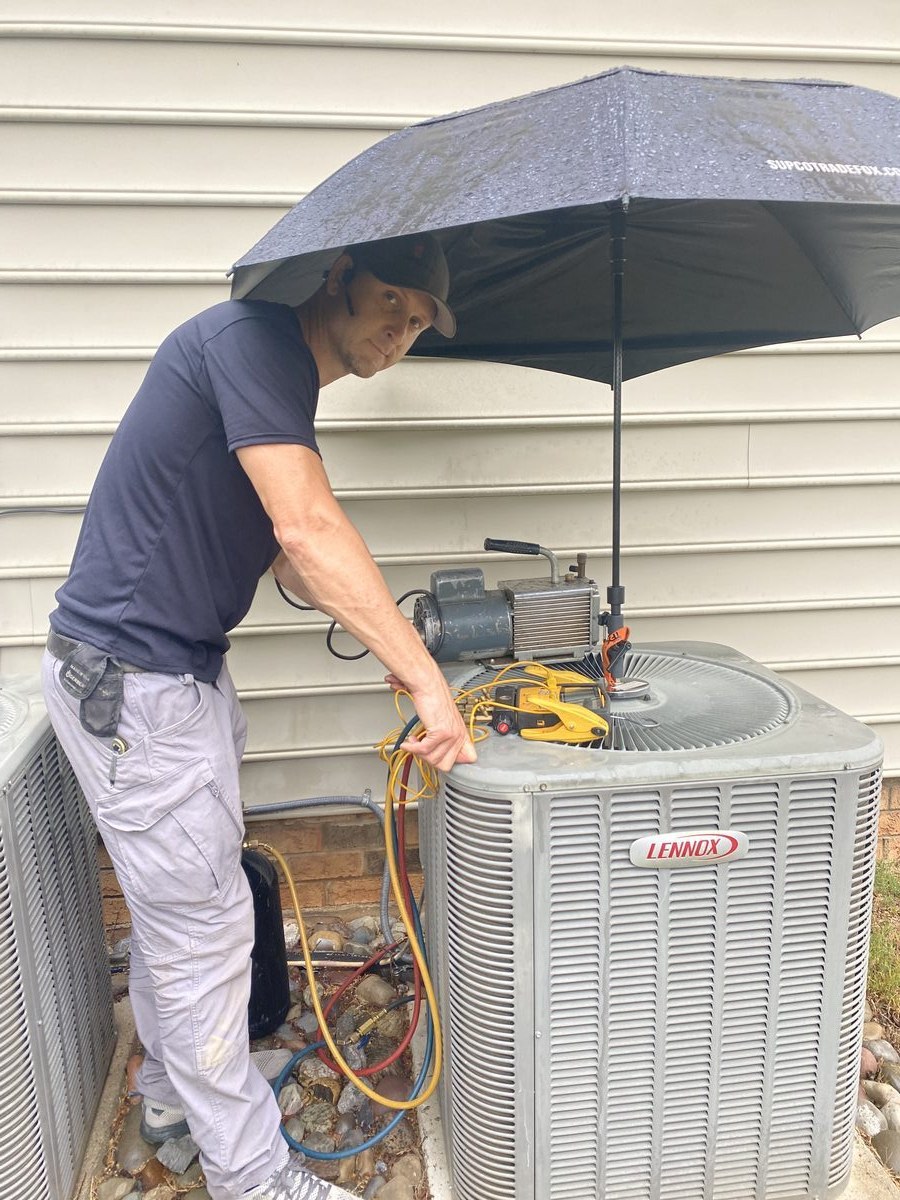
If you've been wondering whether a high-efficiency heat pump can handle Monroe, NC winter conditions, you're asking exactly the right question. The honest answer depends almost entirely on which generation of heat pump technology you're comparing. Older equipment and modern cold-climate systems behave very differently once temperatures drop, and confusing the two leads to bad purchasing decisions in both directions.
This post covers how the technology actually works, what the efficiency ratings mean in plain language, and how Monroe's climate fits into the picture.
#How Does a Modern Heat Pump Actually Heat Your Home?
A heat pump does not generate heat by burning fuel. It moves heat that already exists in outdoor air into your home, using a refrigerant cycle driven by a compressor. Even air at 30°F contains usable thermal energy, and a heat pump extracts it, concentrates it, and delivers it indoors.
The key differentiator in a high-efficiency heat pump is the compressor type. Older systems used single-stage compressors that ran at one speed: full blast or off. When outdoor temperatures dropped toward freezing, those systems struggled to keep up because the compressor could not modulate its output to work harder or smarter in the cold.
Modern cold-climate heat pumps use inverter-driven variable-speed compressors. Instead of switching between on and off, they ramp up and down continuously to match the load. In colder conditions, the compressor can run faster and longer at a lower power draw, extracting more heat per hour than a single-stage unit while cycling far less. This is why cold-climate ratings on these systems often show useful heating output at temperatures that would have sent an older heat pump into full auxiliary mode.
#What Temperatures Can a High-Efficiency Heat Pump Handle in Monroe, NC Winters?
Reputable cold-climate heat pump models maintain meaningful heating capacity down to around 0°F to 5°F ambient temperature, though output does decrease as it gets colder. Monroe, NC sits in USDA Plant Hardiness Zone 7b and typically sees winter lows in the 20s and occasionally the mid-teens during the coldest stretches. That range is comfortably within the operating window of most modern cold-climate heat pumps.
According to the U.S. Department of Energy, air-source heat pumps can reduce electricity use for heating by roughly 50 percent compared to electric resistance heating such as baseboard heaters or furnaces with electric elements. That advantage holds in climates like Monroe's where extended periods below 10°F are rare. For more on what a full system evaluation looks like locally, see our HVAC Services in Monroe, NC page.
- On a typical Monroe winter day in the 30s or 40s, a modern heat pump runs efficiently with little or no supplemental heat.
- During a cold snap in the low 20s, output decreases but most cold-climate models still deliver heat without dropping entirely into backup mode.
- Extended periods below 15°F are uncommon in Union County but not impossible, and the auxiliary heat strips handle those hours without drama.
#What Efficiency Ratings Should You Compare When Replacing a System?
Two ratings matter most when comparing heat pump systems for a replacement.
| Rating | What It Measures | What to Look For |
|---|---|---|
| HSPF2 (Heating Seasonal Performance Factor 2) | Total heating output over a full season divided by total electrical energy consumed, tested under the updated 2023 DOE methodology | Higher is better. A rating above 8.1 HSPF2 is considered high-efficiency under current federal standards for split systems. |
| COP (Coefficient of Performance) | Ratio of heat delivered to electricity consumed at a specific outdoor temperature, often rated at 47°F and 17°F | Look at the 17°F COP if you want to understand cold-weather performance specifically. A COP above 1.75 at 17°F is strong for residential equipment. |
SEER2, which measures cooling efficiency, matters too since your heat pump runs all year. But for Monroe winters, HSPF2 and the low-temperature COP tell you far more about real-world heating costs than SEER2 alone.
#Is a High-Efficiency Heat Pump Better Than a Gas Furnace for Monroe, NC Winters?
For many Monroe homes, a high-efficiency heat pump is the more cost-effective choice, but that is not a blanket statement. The comparison depends on your current electricity rate, your gas rate, and how cold your winters actually get. Monroe's winters are moderate enough that a heat pump spends the majority of heating hours at outdoor temperatures where its efficiency advantage over gas is real and measurable.
If your home already has a well-maintained gas furnace with many years of life left, replacing it purely for efficiency gains may not pencil out financially in the short term. A heat pump replacement makes the most sense when your existing system is aging, failing, or when you are replacing both heating and cooling equipment at the same time, since a heat pump handles both. If you're dealing with a furnace that's already struggling, our Furnace Repair in Monroe, NC page outlines your service options.
One thing worth saying plainly: a heat pump is not the right answer for every household. Homes with poor insulation or ductwork in poor condition will not capture the efficiency benefits that ratings promise on paper. Fixing the building envelope first often delivers more comfort improvement per dollar than upgrading equipment.
#What Should You Check Before Replacing Your Heat Pump System?
Before committing to any equipment, there are a few things worth examining yourself and a few worth having a technician assess.
- Check your current system's age. Heat pumps typically last 15 to 20 years. If yours is past that window and losing efficiency, replacement almost always beats continued repair.
- Look at your electric bills over the past two winters. If your auxiliary heat strips seem to be running constantly even on days in the 30s, that is a sign the existing heat pump is underperforming, not that heat pumps in general cannot handle Monroe winters.
- Have your ductwork inspected. Leaky ducts can waste a substantial portion of conditioned air before it reaches your living space, and no equipment upgrade fixes that on its own.
- Ask specifically about cold-climate rated models when getting quotes. Not every heat pump sold today uses inverter-driven compressor technology. Standard single-stage models are still widely available, and the difference in cold-weather performance is significant.
- Modern cold-climate heat pumps use inverter-driven compressors that maintain meaningful heating output well below freezing, making them a practical choice for Monroe, NC winters.
- Older single-stage heat pumps lose efficiency quickly as temperatures drop toward 30°F; newer variable-speed models hold their output much further down the thermometer.
- HSPF2 and COP ratings are the two most useful numbers to compare when shopping for a replacement heat pump system.
- A heat pump's efficiency advantage over a gas furnace depends on your local electricity