
Should You Repair or Replace Your Heating System in Marshville, NC This Fall?
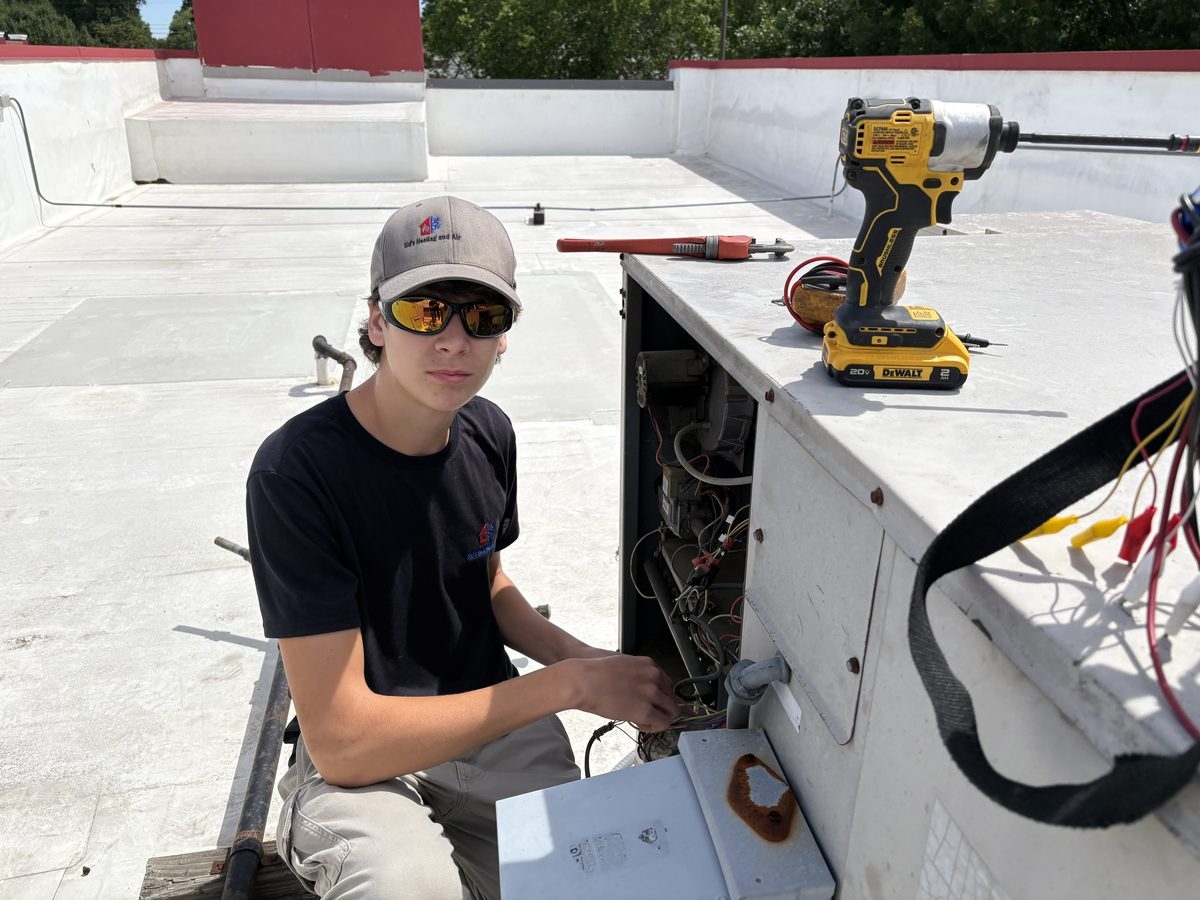
If you're weighing whether to repair or replace your heating system in Marshville, NC, fall is the right time to work through that decision before a cold snap forces your hand. Your furnace or heat pump has been limping along for a few winters now. Maybe it needed a part last January. Maybe it runs longer than it used to, or the house just never gets as warm. That first hard freeze is coming, and you need a real framework, not a gut feeling. Four factors, looked at together, give most homeowners a clear answer. Work through each one honestly, and the right path usually becomes obvious.
#How Old Is Your Heating System, and Why Does That Matter So Much?
A gas furnace that has crossed the fifteen-year mark is approaching the end of its statistically reliable service life. According to the U.S. Department of Energy, most furnaces last between 15 and 30 years depending on maintenance history, and heat pumps typically run 10 to 15 years in a climate like Marshville, NC, where they work year-round for both heating and cooling.
Age alone does not make the decision for you. But it changes how you weigh everything else. A seven-year-old furnace that needs a new inducer motor is probably worth repairing. A nineteen-year-old furnace that needs the same part is a much harder call, because that repair buys you an aging system that is still going to need the next repair six months from now.
If your system is within five years of the end of its expected life and it needs a significant repair, lean toward replacement. You are paying to extend a short runway.
#What Is the Repair-Versus-Replacement Cost Comparison?
A straightforward calculation has been used in the HVAC trade for years: multiply the age of the system in years by the estimated repair cost. If that number exceeds the cost of a new system, replacement is almost always the smarter financial move. This is sometimes called the "$5,000 rule" in service literature, though the specific threshold varies by region and equipment type.
A simpler version that many homeowners find easier to apply: if a single repair costs more than roughly one-third to one-half of what a replacement system would cost, the math starts tilting toward replacement. Here is how those scenarios look side by side.
| Scenario | System Age | Repair Cost (Relative to Replacement) | Likely Better Choice |
|---|---|---|---|
| Minor part, young system | Under 10 years | Less than 20% of replacement cost | Repair |
| Major component, mid-life system | 10 to 15 years | 30 to 50% of replacement cost | Weigh carefully; efficiency gains may tip toward replacement |
| Major repair, aging system | Over 15 years | More than 50% of replacement cost | Replace |
| Repeated small repairs, any age | Varies | Cumulative cost adds up fast | Track total repair spend over last two years before deciding |
The numbers in that table are not absolute rules. They are the starting point for an honest conversation. A good technician should be able to walk you through the same logic without steering you toward whichever answer is more profitable for them. Our furnace repair team in Monroe, NC approaches every assessment that way, straight talk about what the numbers actually show.
#Does Efficiency Rating Actually Affect Your Monthly Costs?
Yes, and the difference is larger than most homeowners expect. Gas furnaces are rated by Annual Fuel Utilization Efficiency, or AFUE. An older furnace installed fifteen or more years ago likely runs at an AFUE of 80% or lower, meaning roughly 20 cents of every dollar you spend on fuel leaves the house as waste heat. Modern high-efficiency furnaces are rated at 95% AFUE or higher, a standard outlined by the ENERGY STAR program.
Heat pumps are measured differently, using Heating Seasonal Performance Factor (HSPF). Older heat pumps in the Marshville area often fall below the minimum efficiency standards that newer equipment must meet. A new heat pump moves more heat per unit of electricity, which translates directly into lower monthly bills.
If your heating bill feels higher than it should be and the system is running correctly, age-related efficiency loss is often the explanation. A newer system does not just reduce repair risk. It reduces operating cost every single month.
When you are comparing repair to replacement, factor in what you are spending on fuel each winter. A system that costs significantly more to operate is eroding its own apparent "savings" every time the thermostat kicks on.
#How Do You Count Past Repairs the Right Way?
One repair does not tell the story. Two repairs in one season tells you a lot. Pull out your records, or think back honestly: how many times has a technician been to your house for this system in the last two to three years? What did each visit cost?
A pattern of recurring failures is one of the clearest signals that a system is past its reliable life. Components wear together, and when one fails, others are usually not far behind. Paying for individual repairs on a system that is cycling through failures is like replacing individual tires on a car with 200,000 miles and a cracked frame. Each fix is technically correct. The overall decision is still wrong.
- Add up every service call cost over the past two to three winters, not just the most recent one.
- Note whether the same component has failed more than once. That is a structural problem, not a fluke.
- Consider how many heating seasons are realistically left. If the answer is "maybe two or three," a large repair is buying very little time.
Giving yourself permission to be honest about what the pattern actually shows is the most useful thing you can do before calling anyone out.
#Is Fall Really the Right Time to Make This Call in the Marshville Area?
Fall is the right time precisely because you are not in crisis yet. Once temperatures in Union County drop into the thirties and your heat stops working on a Sunday night, the decision gets made for you under pressure, with fewer options and less time to think clearly.
Making the repair-or-replace decision in October or early November means you can get multiple assessments, compare equipment options, schedule installation at a normal pace, and have the system fully operational before you actually need it. Waiting until January means you are making a major financial decision while cold air is blowing through your house. Those two situations produce very different outcomes.
If your system is showing any of the warning signs above, this fall is the practical window to act thoughtfully rather than reactively. Our full HVAC services in Monroe, NC cover everything from that initial diagnostic through installation, so you have one consistent resource rather than starting over with someone new at every step.