
Variable Speed Furnace Blower in Monroe, NC: How It Keeps Your Home Comfortable All Fall
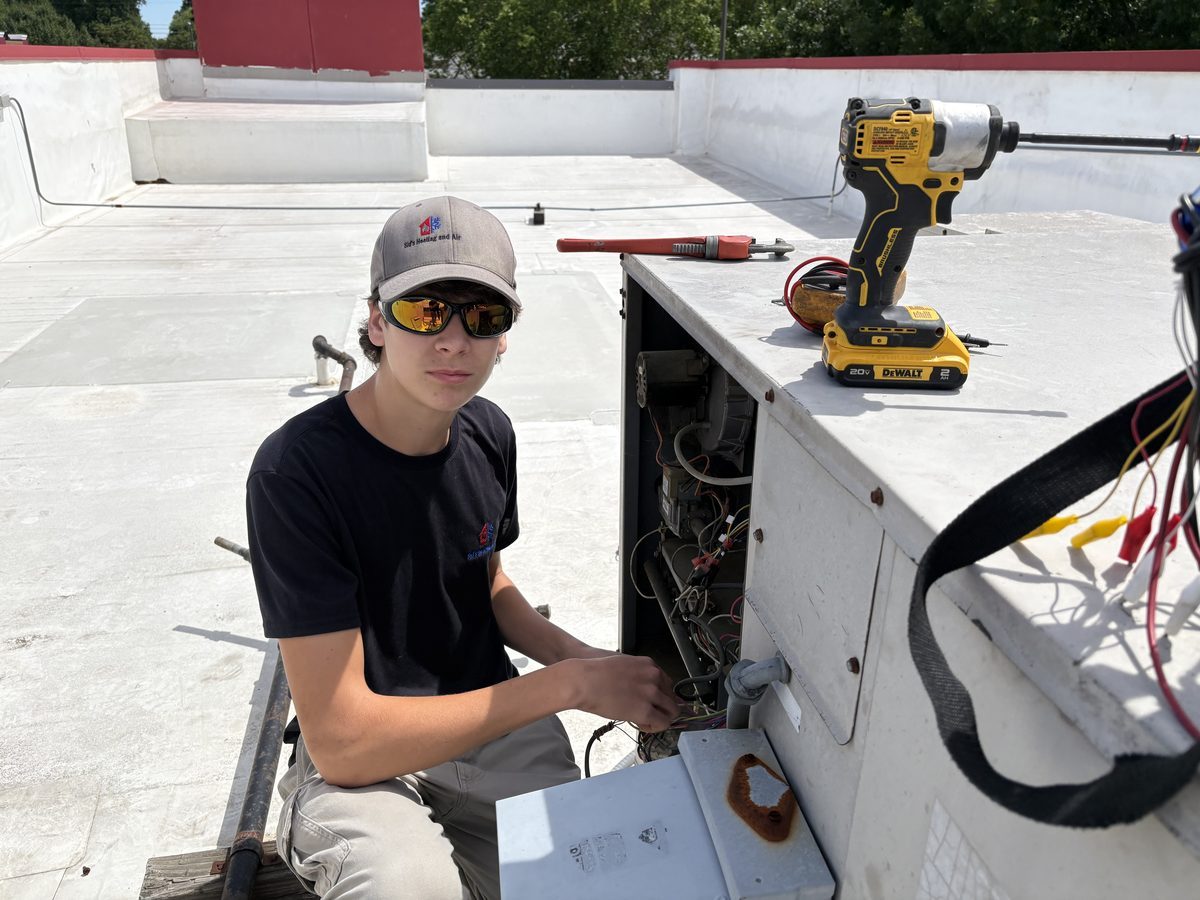
- A variable speed furnace blower uses an electronically commutated motor (ECM) to adjust airflow continuously, rather than switching between fixed high and low settings.
- During Monroe, NC's mild fall weather, when your home needs just a little heat, a variable speed blower ramps down instead of blasting at full capacity and then shutting off.
- Continuous low-speed airflow keeps temperatures more even from room to room and reduces the hot-and-cold swings that single-speed blowers produce.
- ECM blowers use significantly less electricity than standard PSC motors, especially during the long, low-demand run cycles that fall conditions create.
- A variable speed blower is not a must-have for every home, but it delivers the most noticeable benefit in houses with comfort complaints, high utility bills, or uneven heating.
A variable speed furnace blower in Monroe, NC handles the region's mild fall conditions differently than a standard single-speed motor, and understanding that difference can tell you a lot about whether your current system is doing its job. October mornings dip into the 50s, afternoons climb back to the 60s or low 70s, and your furnace spends most of the season handling small temperature swings rather than heavy heating loads. That in-between weather is exactly where the type of blower motor in your furnace starts to matter.
A standard single-speed blower has one mode: full blast. When the thermostat calls for heat, it fires up at 100 percent and runs until the setpoint is reached, then shuts off completely. That works fine in the middle of February. In October, it means short, hard bursts of warm air followed by quiet periods where temperatures drift back down, a house that swings between slightly too warm and slightly too cool all day long.
#How Does an Electronically Commutated Motor Actually Work?
An electronically commutated motor, almost always called an ECM, uses a built-in circuit board to control motor speed precisely across a wide range, rather than jumping between a fixed set of positions. Traditional blower motors, called PSC (permanent split capacitor) motors, are essentially on or off, sometimes with a second lower speed for air conditioning. An ECM can run at nearly any point along its range, adjusting in small increments as demand changes.
Your furnace's control board tells the ECM what airflow is needed based on the call from the thermostat, the current duct pressure, and sometimes even the humidity level if your system monitors it. The motor responds by running faster or slower, not by switching between preset steps. According to the U.S. Department of Energy, electronically commutated motors are substantially more efficient than standard PSC motors, particularly at partial loads, which is exactly what fall conditions in Monroe, NC create.
ECM motors maintain their efficiency advantage most clearly at low and mid-range speeds. When demand is light, a PSC motor still runs at full draw. An ECM scales down its electricity use along with its speed, which is why the efficiency gap is widest during mild weather.
#Why Does a Variable Speed Blower Matter More in Fall Than in Winter?
Deep winter is the easier case for any furnace. When it is 28 degrees outside and your home needs a full 70 degrees inside, the furnace runs long cycles at or near full capacity regardless of what kind of blower it has. The difference between motor types narrows when demand is consistently high.
Fall is different. Your home might only need to rise three or four degrees to hit setpoint. A single-speed blower blasts through that call in a few minutes, shuts off, and the cycle repeats all day. A variable speed blower recognizes that light demand and runs at a lower speed for a longer period instead. That longer, gentler run cycle does several things at once.
- It keeps air moving through your filter continuously, improving filtration and indoor air quality during a season when windows start closing and dust accumulates.
- It distributes heat more evenly because the air has more time to circulate before the blower shuts off.
- It reduces the dramatic temperature swings between cycles that single-speed systems produce.
- It runs at lower wattage for most of that cycle, which shows up on your electric bill over the course of the season.
#How Do the Two Motor Types Compare Side by Side?
| Feature | Single-Speed PSC Motor | Variable Speed ECM Motor |
|---|---|---|
| Airflow control | Fixed speed, on or off | Continuous adjustment across a wide range |
| Performance during mild fall loads | Short, hard cycles; temperature swings between calls | Long, low-speed runs; more even temperatures |
| Electricity use at partial load | Full motor draw regardless of demand | Scales down with speed; lower draw at partial load |
| Air filtration | Only filters when blower is running at full speed | Filters continuously during extended low-speed runs |
| Noise level at low demand | Full-speed noise every cycle | Noticeably quieter at lower speeds |
#Is a Variable Speed Blower Worth the Cost When Replacing a Furnace?
Furnaces with ECM blowers cost more upfront than comparable single-speed units, and that is a real consideration. Whether the difference is worth it depends on your situation.
If your current home already heats evenly, your utility bills feel reasonable, and you have no significant comfort complaints, a single-speed system may serve you well. Not every home in Monroe, NC needs the premium option.
Where a variable speed furnace blower tends to earn its price difference is in homes with uneven heating, where one side of the house is noticeably warmer or cooler than the other. It also makes more sense in homes where the furnace runs frequently but for short periods, because that pattern signals the blower is overshooting demand on every call. If someone in your household has allergies or respiratory sensitivities, the continuous low-speed filtration that an ECM enables is a practical benefit, not just a marketing claim. Our furnace repair service in Monroe, NC can evaluate whether your current blower motor is performing as it should before you commit to any upgrade decision.
Before deciding anything, walk through your home during the first cold snap of fall. If the upstairs is significantly warmer than the downstairs when the heat is running, or if the air feels stuffy shortly after the blower shuts off, those are real signals that your current blower is cycling too hard and too fast for your home's layout.
#What Should You Check on Your Current System Before Fall Heating Season Begins?
Whether you have a PSC or ECM blower, a few basic checks apply to every system before fall in Monroe, NC gets underway.
- Replace the air filter. A dirty filter forces any blower motor to work harder and reduces airflow regardless of how sophisticated the motor is.
- Clear the area around your indoor air handler. Stored boxes, furniture pushed against return vents, and closed supply registers all restrict airflow and create the uneven heating that people sometimes blame on their blower motor when the real cause is simpler.
- Listen to the blower during the first heating cycle of the season. A rattling or grinding sound that was not there last spring is worth having checked before it becomes a larger problem.
- Look at your filter again after the first week of heating season use. If it loaded up quickly, your home may have more airborne dust than you realized, adding extra strain on the blower over time.
Start with the simple things first. A clean filter and open vents might solve the comfort problem you are experiencing before any equipment upgrade enters the conversation. For a full picture of what your system needs heading into winter, explore our HVAC services in Monroe, NC.
#Common Questions
Can I add a variable speed blower to my existing furnace?
In most cases, no. The ECM blower motor is integrated into the furnace's control board and designed as a system, not a standalone upgrade. If your current furnace uses a PSC motor, replacing the motor alone is rarely practical or cost-effective. A variable speed blower typically comes as part of a mid-tier or higher furnace replacement.
Will a variable speed furnace blower actually lower my electric bill?
It can, particularly during fall and spring when partial-load conditions are common. Because an ECM motor draws less power at lower speeds, and because it runs at lower speeds more often during mild weather, the efficiency advantage is real over the course of a season. Actual savings depend on your home's size, insulation, and how often the system runs.
How long do ECM blower motors typically last?
ECM motors are generally considered durable components, and many manufacturers rate them for long service lives. Like any mechanical part, they can fail. The integrated electronics mean that repair costs can be higher than a simple PSC motor swap if something does go wrong, so factor that into the total cost of ownership conversation.
Is the quieter operation of a variable speed blower noticeable?
Yes, most homeowners notice it right away. When the ECM runs at 40 or 50 percent speed during a mild fall call for heat, the air handler is significantly quieter than a single-speed blower firing at full capacity. If noise from your current system bothers you, it is one of the more immediate and tangible benefits of the upgrade.
If you have questions about whether your current furnace blower is handling fall conditions well, or if you are weighing a system replacement before winter arrives in Monroe, NC, the team at Sid's Heating & Air is glad to take a look and give you a straight answer, no pressure, just honest information so you can make the right call for your home.